
You’ve probably heard someone at deer camp say, “Pressure is rising. Bucks should be moving tonight.” For once, the camp expert might be right. Barometric pressure is one of the most reliable signals deer use when deciding to get on their feet. If you learn how to read it, you can stop hunting on hope and start hunting when the odds are actually in your favor.
This is the fast guide. No fluff. No weather-nerd jargon. Just what works.
What Barometric Pressure Is and Why Whitetails Care
Barometric pressure is simply the weight of the air pushing on everything around us. When big weather systems roll through, that pressure goes up or down. Deer feel these changes long before you check your weather app, and it affects their behavior. If you ignore pressure, that’s like ignoring wind direction. And if you ignore wind, well, we both know how your season is going.
When Pressure Is Dropping Read This Twice
A falling barometer usually means a storm or front is on the way. Deer feel it coming and often feed early to get prepped for the slowdown during the storm.
Why you should care:
This is one of the best times to be in a tree. And no, not “after work when you get around to it.” Be smart.
Best moves during dropping pressure:
- Hunt before the front hits. One to six hours before is prime time.
- Evening sits are usually stronger here.
- Hunt food. Green fields, fresh cut corn, acorns raining from oaks, anything that pulls evening movement.
- Set up between bedding and groceries, not right on the field edge like a rookie. Mature bucks often stage inside the cover first.
If pressure is falling fast and you are still on the couch, enjoy that couch. Someone else is about to shoot your deer.
When Pressure Is Rising You Should Already Be Heading to the Woods
A rising barometer usually follows a front. The weather clears, the air feels crisp, and deer finally stretch their legs after hunkering down. This is a high odds window for mature bucks, not just yearlings that stick their tongues out at trail cams.
Why you should care:
The day right after a front is one of the best chances to see a good buck on his feet in daylight.
Best moves during rising pressure:
- Hunt as soon as the weather clears.
- Morning sits can be deadly. This is the time to risk a smart slip near bedding.
- Focus on pinch points, funnels, terrain that forces movement, and those sneaky staging areas bucks love.
- If crops were just harvested, rising pressure can turn those fields into a buffet line.
If the front passes overnight, get your butt out of bed and be set up before sunrise. Calm, cold, high pressure mornings have ruined a lot of excuses.
The Pressure Numbers That Matter
Hunters argue about everything. Broadheads, camo patterns, even whether coffee should count as breakfast. But most agree on this part.
Watch this range: 29.8 to 30.2 inHg
Movement often spikes in this zone, especially when the pressure is climbing. If it pushes above 30.2 with a temperature drop, that is a green light for targeting mature bucks.
The Pressure Plus Temperature Combo
Pressure is good. Pressure plus a temperature drop is better. Deer respond to that combo like someone rang the dinner bell.
Simple rule to remember: Rising pressure plus an eight to fifteen degree temperature drop is a high odds hunt.
If pressure rises but it stays warm, deer might still move, but not with the same urgency. Think “walk to the fridge” movement, not “Black Friday stampede” movement.
Wind, Thermals, and When Pressure Stalls
Pressure does not work alone. It ties into wind and thermals too.
- Dropping pressure often brings swirling, inconsistent wind. If you hunt dumb, your scent will get there before you do.
- Rising pressure usually brings stable thermals and cleaner access routes. That is why smart bowhunters love those crisp mornings.
When pressure stalls:
If the barometer stays low and steady for more than a day, especially with warm weather, deer activity usually tanks. Do not burn your best stand. Save it for a real pressure swing. Hunt only if you have a bulletproof access plan and fresh sign.
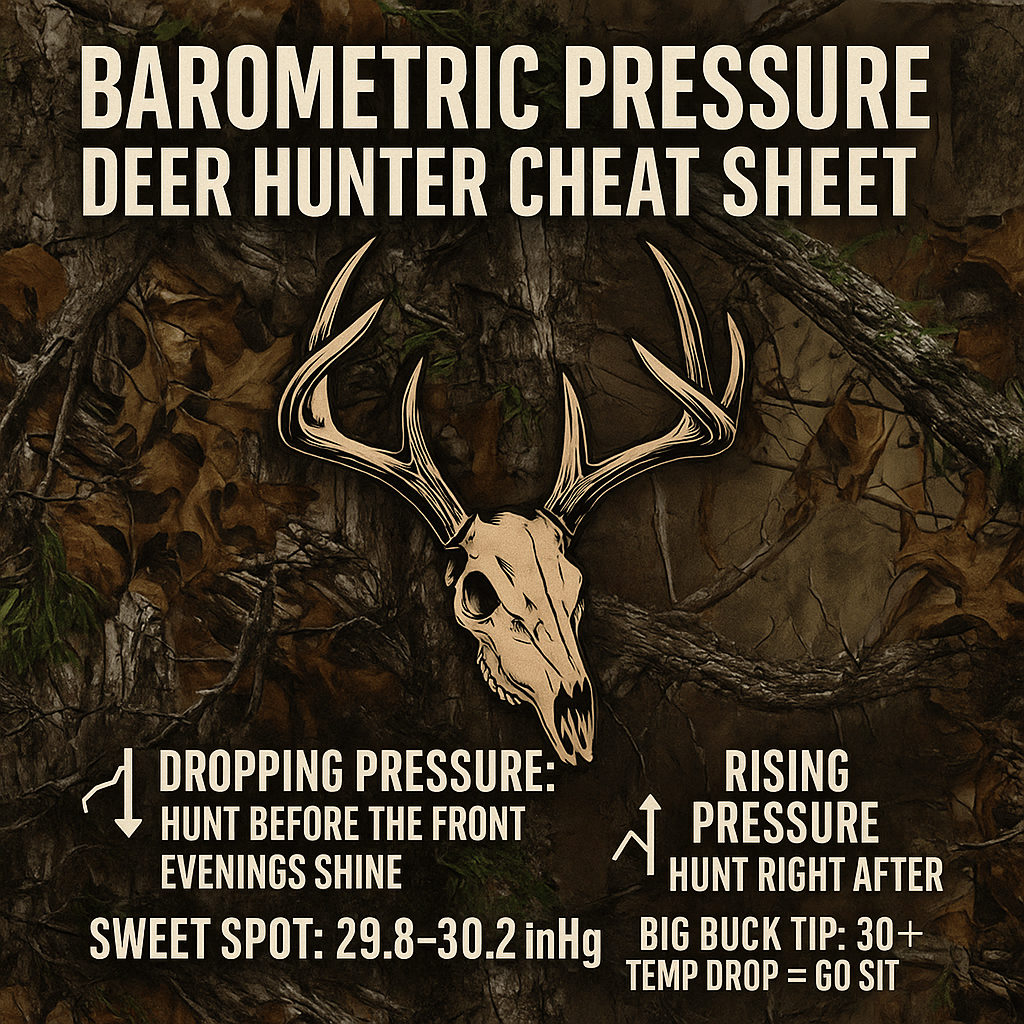
Quick Reference: Screenshot This
- Dropping pressure: Hunt before the storm. Evenings are strong. Hunt food.
- Rising pressure: Hunt right after the weather clears. Mornings can be excellent. Hunt bedding and funnels.
- Best range: 29.8 to 30.2 inHg
- Big buck tip: Rising above 30 with a cool down is a go-sit-your-best-stand moment

Final Thoughts
Deer do not need weather apps to know what is coming. They feel the shift in the air before the first raindrop. If you build your hunts around pressure changes instead of your work schedule, your odds go way up.
Here is the cheat code you came for:
Drop: Hunt before the storm. Evening food focus.
Rise: Hunt after the storm. Morning bedding focus.
If you hunt the rise and fall instead of the calendar, you will see more deer in daylight. And if you actually use this instead of just nodding at it, you might even fill that tag before the freezer gets lonely.